



France remains the leading destination for learning French as a foreign language. From intensive programs in Lyon to immersive courses in Paris, the country offers a structured, high-quality educational environment supported by recognized institutions and certified language centers.
This guide provides a comprehensive overview of the best French language schools in France, along with key criteria to help you select the program best suited to your profile, objectives, and budget.
Why come to France to learn french?
French: a global language with strategic value
Learning French in France represents a significant investment in your academic, professional, and personal development. French is not only a language of culture, but also a language of international communication.
According to the Organisation internationale de la Francophonie, French is spoken by nearly 400 million people worldwide and continues to grow across all continents.
It is one of the official or working languages of major international institutions, including the United Nations, the European Union, UNESCO, and the International Olympic Committee.
Mastering French provides access to:
- International career opportunities in diplomacy, business, and global organizations
- Higher education in French universities and grandes écoles
- Residency and naturalization pathways (minimum B1 level required)
- Direct access to French and Francophone cultures
Why immersion in France builds real language skills
Studying French in France ensures continuous exposure to the language in authentic contexts. Classroom learning is systematically reinforced through everyday interactions: in shops, public transport, cultural venues, and social settings.
In an immersive environment, language acquisition becomes both faster and more durable. For example, a learner following 15 lessons per week may reach a B1 level within a few months, whereas achieving the same level without immersion typically requires a significantly longer period.
Immersion is therefore not an additional benefit, but a central component of effective language acquisition.
What is the experience of studying french in France?
A comprehensive educational and cultural experience
Learning French in France combines structured instruction with cultural immersion and social interaction. It is a holistic experience that extends beyond the classroom.
A typical program includes:
- Morning lessons: grammar, vocabulary, oral and written communication, pronunciation
- Afternoon activities: cultural visits, workshops, excursions
- Evenings: interaction with host families, local communities, and international peers
This integrated approach fosters both linguistic competence and intercultural understanding.
Student perspective
Feedback from international learners consistently highlights the effectiveness of combining formal instruction with real-life practice. Small class sizes, qualified teachers, and daily immersion create optimal conditions for sustained progress.
What are the locations of french language schools?
Best cities to learn french in France
France offers a wide range of destinations, each providing a distinct learning environment. The choice of city influences cost of living, lifestyle, and overall experience.
- Lyon: balanced quality of life, accessibility, strong cultural identity
- Paris: global capital, extensive cultural and academic offer
- Nice: Mediterranean environment, international appeal
- Montpellier: dynamic student city with a strong community atmosphere
- Marseille: vibrant cultural diversity and southern lifestyle
- Bordeaux: heritage city with a well-established academic environment
Why Lyon stands out
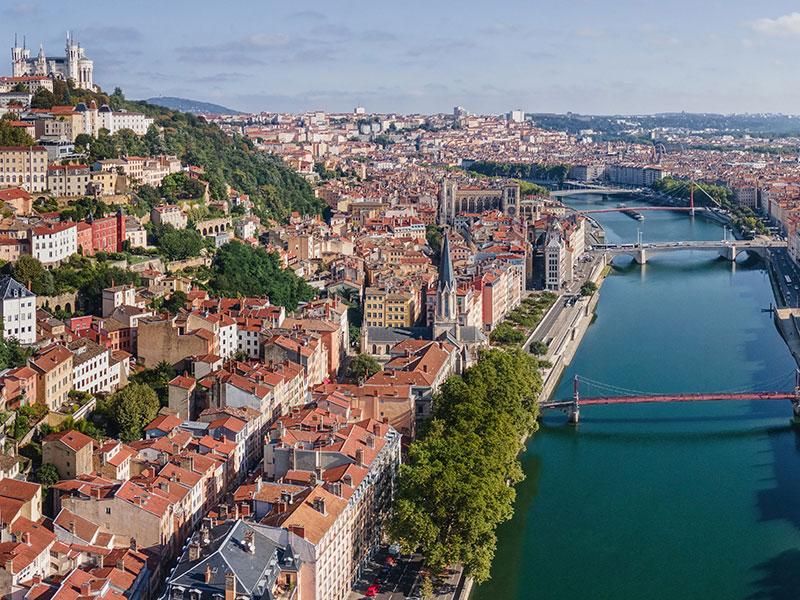
Lyon is widely recognized as a particularly suitable destination for international learners. It offers:
- Moderate cost of living compared to Paris
- Excellent transport connections (TGV network)
- Rich cultural programming throughout the year
- A strong reputation in gastronomy and quality of life
What is the cost of learning french in France?
Plan your total budget from day one
The cost of learning French in France includes more than tuition fees. A complete budget covers four categories: tuition, accommodation, food and transport, and cultural activities. Depending on your chosen city and program type, the total can vary considerably.
Estimated monthly living costs by city in 2026 (based on verified data from StudyConnectFrance) :
| Expense | Lyon / Bordeaux | Paris |
| Accommodation (shared flat) | €350 – €600 | €600 – €900 |
| Food and groceries | €150 – €250 | €200 – €300 |
| Local transport | €30 – €40 | €50 – €75 |
| Phone and internet | €20 – €30 | €25 – €35 |
| Leisure and cultural activities | €100 – €150 | €150 – €200 |
| Monthly total | €650 – €1,070 | €1,025 – €1,510 |
Real tuition fees from top schools
Tuition fees vary depending on the institution and course format. Intensive programs generally offer the most efficient progression in terms of cost per learning hour :
Alliance Française de Lyon – 1 month immersive course (80 hours): from €796
ELFE Paris – standard course, 1 week (15 lessons): from €250
Lyon Bleu International – DELF/DALF exam preparation: from €505 per week
Budget tip: In Paris, plan a minimum of €1,200/month. In Lyon or Bordeaux, a budget of €700–€1,000/month is realistic and manageable for most international learners, including accommodation and cultural activities.
Our most popular French courses
 1 month

A1 – C1

1 month sur 80h/month

monday to friday / 9h – 13h

 3 months
A1 – C1
3 months sur 80h/month
monday to friday / 9h – 13h
 1 month
A1 – C1
1 month sur 20 hours/month
tuesday and thursday / 18h – 20h
 2 weeks
A1 – C1
2 weeks sur 80h/month
monday to friday / 9h – 13h
What Courses are Offered for Learning French?
Programs for all profiles
French language programs are structured according to the CEFR (A1 to C2), ensuring international recognition of levels.
Available formats include:
- Standard courses (15-20 lessons per week)
- Intensive courses (25-30 lessons per week)
- Private lessons
- Examination preparation (DELF, DALF, TCF, TEF)
- Online and hybrid learning options
- Summer intensive programs – short, immersive stays combining lessons with cultural excursions
Learning progression
Progression depends on intensity and immersion. In a structured immersive program, learners can advance steadily through CEFR levels within clearly defined timeframes :
| CEFR Level | Estimated Hours (Immersion) | Duration (15 lessons/week) |
| A1 | 90 – 120 hours | 6 – 8 weeks |
| A2 | +100 hours | +7 weeks |
| B1 | +130 hours | +9 weeks |
| B2 | +150 hours | +10 weeks |
| C1 | +200 hours | +13 weeks |
Teaching methods: action-based learning
Schools differ in how they design and deliver their programs. Some develop proprietary materials; others use established textbooks adapted to their own methodology.
At the Alliance Française de Lyon, lessons are structured around the Défi manual from Éditions Maison des Langues – a proven, action-based approach to learning French as a foreign language. The school also integrates the FASP ecological project and collaborates with La Caravane des Dix Mots through creative writing workshops organised outside regular class hours.
How to choose the best french language school?
Key criteria to evaluate before you register
To ensure the quality and relevance of your program, it is recommended to evaluate:
- Official certifications (Qualité FLE, Qualiopi)
- Teacher qualifications in FLE (Français Langue Étrangère)
- Class size (ideally 8–12 students)
- Accommodation services
- Cultural program and extracurricular activities
- Accessibility and location
- Administrative support (including visa assistance)
The Qualité FLE label
The Qualité FLE label is the official certification issued by the French authorities. To obtain the label, schools must meet strict eligibility criteria:
- At least 3 consecutive years of French language teaching
- A minimum of 2,400 teaching hours per year for year-round schools
- Permanent, qualified teaching staff on official contracts
- Standards verified across 6 criteria: reception, premises, management, teaching team, programs, and results
The Qualiopi label complements the Qualité FLE for schools offering vocational training programs financed through professional development funds.
Practical tip: Always request a meeting with the academic team before registering. Ask about teaching methodology, class sizes, program options, and cancellation policies. A school that responds quickly and clearly is already a strong sign of quality and reliability.
What are the best schools to learn french in France?
Recognized institutions by city
This selection is a practical guide. The best French language school for you depends on your level, your goals, your preferred city, and your total budget. All schools listed below hold recognised certifications and are consistently recommended by their international students.
🏙️ Lyon – best value and cuality of life
Alliance Française de Lyon – Recognized by the french ministry of national Education, welcoming over 1,200 students per year from all nationalities. Small groups from A1 to C1, year-round programs, intensive and standard courses. Holds both Qualité FLE and Qualiopi labels. Official examination center for DELF, DALF, and TCF. Homestay accommodation support and cultural activities available.
Lyon Bleu International – Established school in the heart of Lyon, Qualité FLE and Qualiopi certified. Year-round courses for adults and university groups, weekly cultural activities and excursions included. DELF/DALF exam preparation from €505 per week.
Alpadia Lyon – Part of an international language school network. Standard and intensive French courses for adults and juniors (from age 8). Strong focus on language travel packages combining lessons and guided cultural activities.
🗼 Paris – the flagship french immersion destination
Alliance Française Paris – One of the most internationally recognized French language institutions in the world. All CEFR levels from A1 to C2. Large international learner community and prestigious academic environment.
ELFE Paris – Qualité FLE-certified school in the heart of Paris. Intensive programs in mini-groups of up to 10 students. Standard courses from €250 per week. Specializes in adult and professional learners. Homestay accommodation with Parisian families available.
École Suisse Paris – Boutique school with small class sizes and highly personalized teaching. Praised for its warm atmosphere and flexible program options. Ideal for private tuition and short intensive stays.
🍷 Bordeaux – heritage, community, and affordable french courses
Alliance Française Bordeaux – French courses at all CEFR levels, exam preparation, and cultural activities deeply rooted in the Bordeaux region and its world-renowned wine heritage.
New Deal Institut – Dynamic school in Bordeaux offering standard and intensive French courses for adult international learners, with a strong community atmosphere and highly recommended reviews from former students.
Conclusion
France offers a uniquely effective environment for learning French, combining academic excellence, cultural immersion, and international openness.
Selecting the right institution requires careful consideration of your objectives, level, and preferred learning environment. Certified schools, particularly those within the Alliance Française, provide a reliable framework to ensure quality, consistency, and meaningful progress.
Prospective students are encouraged to contact institutions directly to define a program aligned with their individual goals and expectations.