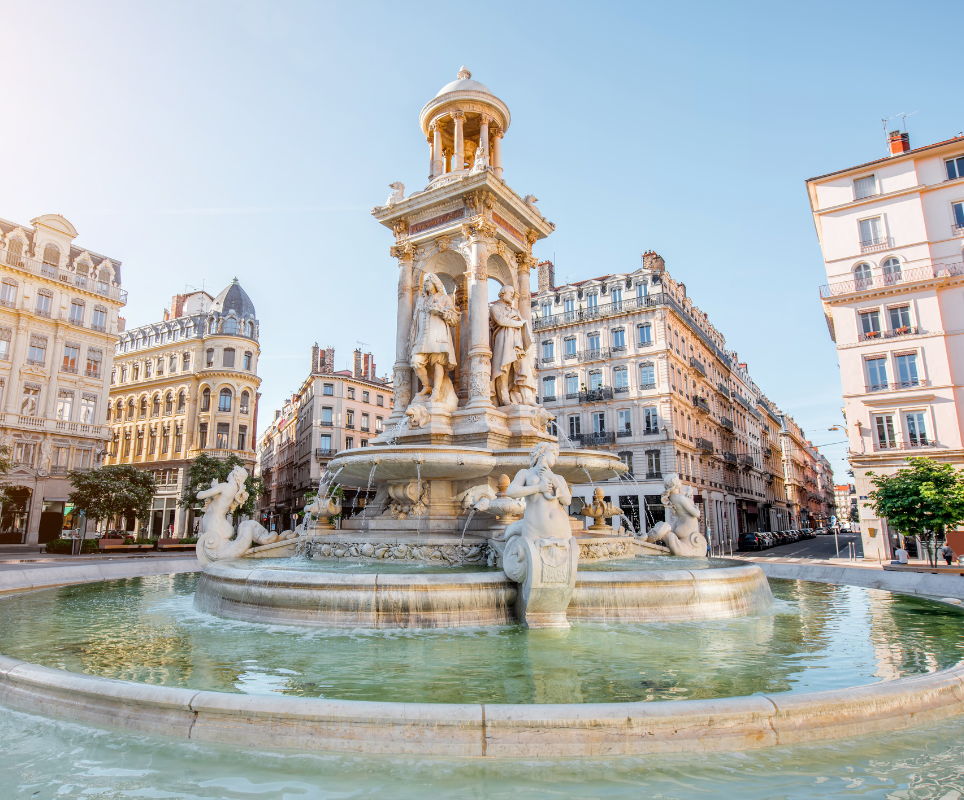


The best cities in France to live in are Lyon, Bordeaux, Nantes, Toulouse, and Montpellier. The right choice depends on your profile. Lyon suits professionals and expats. Bordeaux delivers quality of life and culture. Nantes wins for families and sustainability. Toulouse appeals to engineers and sunshine seekers. Montpellier charms students and Mediterranean lifestyle lovers.
Each city profile below is built on real data, official census figures, and named industry sources. Every monthly budget reflects current 2026 rental and cost-of-living data. No figure is invented. We have flagged each statistic with its source so you can verify, compare, and trust the result.
What makes a city the best place to live in France?
Choosing a French city goes beyond ranking lists. Each profile prioritises different criteria. Knowing what matters most is the first step.
The core criteria for English speakers
The following criteria carry the most weight for newcomers from English-speaking countries:
- Cost of living and property prices: rent, groceries, utilities, transport.
- Job market and growth sectors: opportunities for skilled professionals and remote workers.
- Expat community and English-friendly environment: meetups, international schools, local services.
- Quality of life: public transport, healthcare access, green spaces, cultural life.
- Schooling for families: bilingual sections, international curricula, IB programmes.
- Connectivity: international airport, TGV access, regional rail.
- Climate and outdoor lifestyle: hours of sunshine, proximity to coast or mountains.
Healthcare access and personal safety rank high among older expats. France runs a universal public healthcare system rated among the most efficient in Europe. Ranking criteria differ depending on whether you target a metropolitan area or a smaller town.
Safety also varies sharply by neighbourhood within a city, more than between cities. A central district in Lyon or Bordeaux can feel calmer than a peripheral district in a smaller town. Local research, on-the-ground visits, and conversations with current expats give a sharper picture than headline rankings.
Why “best” depends on your profile
A 30-year-old engineer working at Airbus has nothing in common with a retiree from Florida looking for sun. The same city scores high for one and low for the other.
This guide is built around four profiles: professionals, families, retirees, and remote workers. Each section flags the city that fits your situation best, so you avoid generic top-ten lists that ignore lifestyle differences.
Where should expats live in France?
Below is a direct answer by profile. Use it as a starting point, then explore each city in detail in the next section.
Best cities by professional situation
- Professionals and remote workers: Lyon for economic dynamism, biotech, finance, and digital sectors. Paris remains the top hub but with the highest cost burden.
- Engineers and aerospace workers: Toulouse, headquarters of Airbus with around 27,000 Airbus employees in the metropolitan area (Airbus, 2026).
- Tech and startup workers: Rennes holds the French Tech Capital label since 2019, with over 400 startups (La French Tech Rennes Saint-Malo, 2026).
- Healthcare and life sciences: Lyon hosts Lyonbiopôle, the regional excellence cluster federating more than 250 organisations and almost 100,000 healthcare jobs across the region (Lyonbiopôle, 2026).
Best cities by family and life-stage situation
- Families with children: Nantes, named European Green Capital in 2013 by the European Commission (European Commission, 2013), praised for its tramway, schools, and green spaces.
- Retirees: Nice for the Côte d’Azur lifestyle. Montpellier for sunshine and intermediate prices, with around 2,680 hours of sunshine annually (Climate-Data.org, 2026).
- Students: Lyon and Paris for the largest university networks. Montpellier ranks among the most student-friendly cities thanks to its three universities.
Lyon also stands out for the diversity of its university offer, with leading programmes in gastronomy, biomedical research, and engineering. The Alliance Française de Lyon welcomes thousands of international students each year, making it a strong entry point for English speakers learning French.
Best cities in France to live in: city by city
Each profile below covers ideal target, key advantages, main drawback, and estimated monthly budget for a couple, excluding rent.
Lyon — Best overall balance
Ideal for: professionals, expats, families, students.
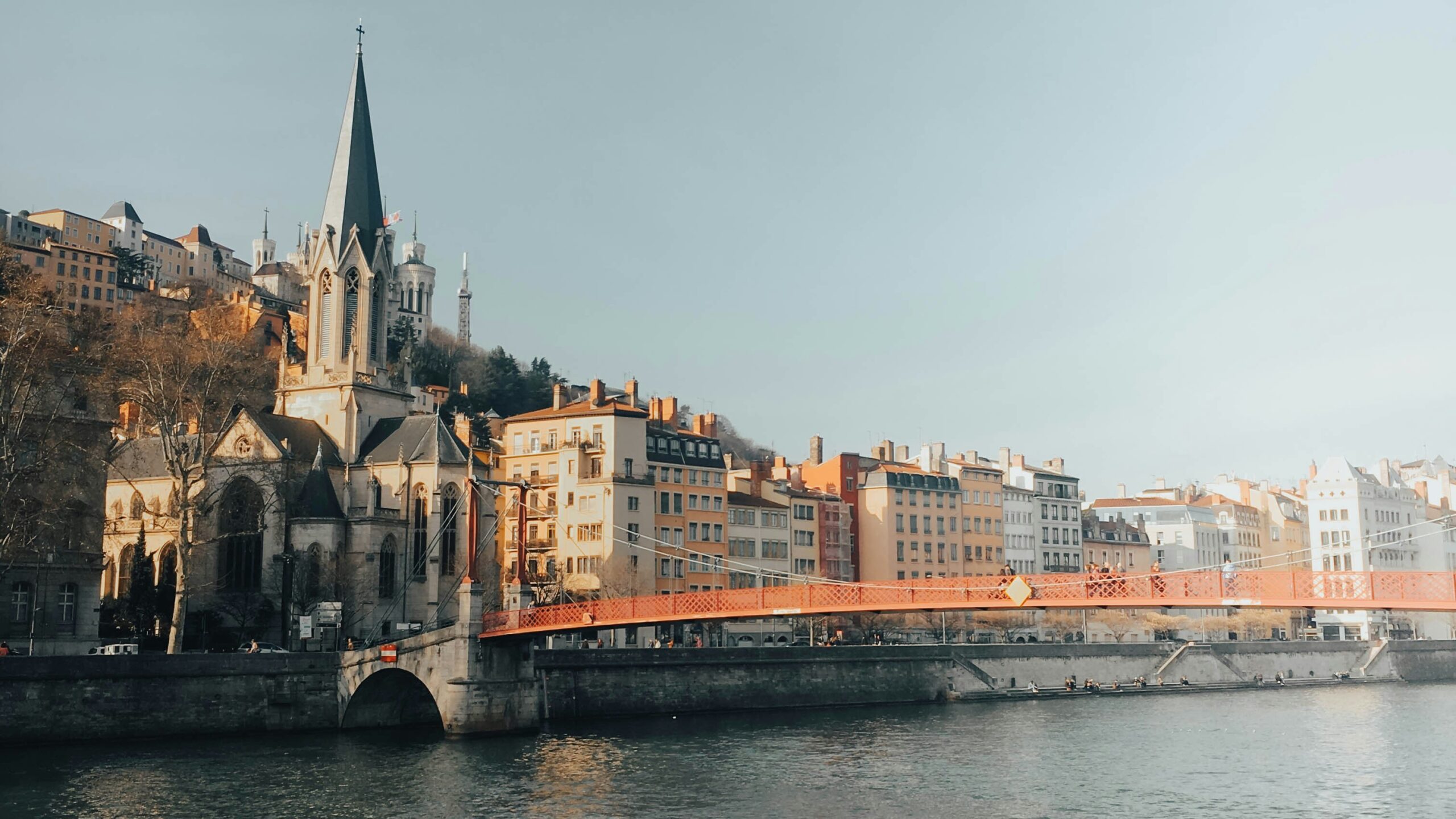
Lyon is France’s third-largest city with 523,000 inhabitants (INSEE, 2026). The city hosts Lyonbiopôle, a global excellence cluster in biotechnology with Gold label certification from the European Cluster Excellence Initiative (Lyonbiopôle, 2026). Lyon also wears the crown of gastronomic capital of France. The TGV connects Paris in 2 hours, Geneva in 2 hours, and Marseille in 1h45.
Main drawback: no beach, grey winters from November to February.
Estimated monthly budget: €1,400 – €2,000 for a couple, excluding rent. Numbeo data points to around €5,000 monthly in total to maintain a comfortable lifestyle in Lyon (Numbeo, 2026).
Our courses in Lyon
 6 months

A1 – C1

6 months over 80h/month

monday to friday / 9h – 13h
 10 months
A1 – C1
10 months over 80h/month
monday to friday / 9h – 13h
 1 month
A1 – C1
1 month over 80h/month
monday to friday / 9h – 13h
 2 weeks
A1 – C1
monday to friday / 9h – 13h
Bordeaux — Best lifestyle and culture
Ideal for: remote workers, families, wine and culture lovers.
Bordeaux holds UNESCO World Heritage status since 2007 for its Port of the Moon, covering nearly 1,800 hectares and roughly 40% of the city’s area (UNESCO, 2007). It is the largest urban area inscribed by UNESCO as of 2021. The TGV reaches Paris in 2 hours.
Main drawback: tight central rental market, weaker inter-city rail beyond Paris.
Estimated monthly budget: €1,300 – €1,900 for a couple, excluding rent. Total comfortable monthly cost sits around €4,750 (Numbeo, 2026).
Nantes — Best for families
Ideal for: families, digital professionals, sustainability-minded workers.
Nantes received the European Green Capital Award in 2013 from the European Commission. The jury praised its tramway network, bike-share system, and low carbon emissions of 4.77 tonnes per capita (European Commission, 2013). With 332,515 inhabitants (INSEE, 2026), Nantes balances size and liveability. Schools, parks, and family services rank among the strongest in France.
Main drawback: Atlantic weather, frequent rain, far from southern sunshine.
Estimated monthly budget: €1,200 – €1,800 for a couple, excluding rent.
Toulouse — Best for engineers
Ideal for: aerospace engineers, students, sun-seeking professionals.
Toulouse is the European aerospace capital and Airbus global headquarters, with around 27,000 Airbus employees in the metropolitan area (Airbus, 2026). The city also hosts Thales Alenia Space and the CNES. With 519,314 inhabitants (INSEE, 2026), Toulouse offers a mild climate and weekend access to the Pyrenees and the Mediterranean.
Main drawback: less developed public transport than Lyon, scorching summers.
Estimated monthly budget: €1,200 – €1,700 for a couple, excluding rent. Comfortable lifestyle around €4,800 monthly (Numbeo, 2026).
Montpellier — Best for sunshine and student lifestyle
Ideal for: students, retirees, Mediterranean enthusiasts.
Montpellier counts 313,712 inhabitants (INSEE, 2026). The city averages around 2,680 hours of sunshine per year, among the highest in France (Climate-Data.org, 2026). The young population gives Montpellier a dynamic cultural energy. The Mediterranean coast lies 10 km away. Cévennes hiking trails are within an hour.
Main drawback: limited inter-city train connections, smaller job market than Lyon or Paris.
Estimated monthly budget: €1,100 – €1,700 for a couple, excluding rent.
Paris — Best for international ambition
Ideal for: corporate professionals, culture lovers, diplomats.
Paris is France’s global hub. Every major industry holds a presence here, from luxury and finance to tech. The international expat community is the largest in France, with hundreds of meetups, English-speaking churches, and international schools across districts.
Main drawback: very high cost of living, extremely tight housing market, intense daily rhythm.
Estimated monthly budget: €2,200 – €3,500 for a couple, excluding rent. A one-bedroom flat in the city centre rents for €1,200 – €1,600 monthly (Numbeo, 2026).
Rennes — Best value for money
Ideal for: young professionals, remote workers, families seeking affordability.
Rennes earned the French Tech Capital label in 2019. The local ecosystem includes over 400 startups and around 40,000 tech jobs across Rennes and Saint-Malo (La French Tech Rennes Saint-Malo, 2026). Property prices stay among the most accessible of France’s large cities. The TGV reaches Paris in 1h30.
Main drawback: Breton weather, less sunshine than southern cities.
Estimated monthly budget: €1,100 – €1,600 for a couple, excluding rent.
Nice — Best for retirees and Côte d’Azur lifestyle
Ideal for: retirees, second-home buyers, lovers of the French Riviera.
Nice delivers a maximum quality of life on the Côte d’Azur. Mediterranean coast, mild winters, proximity to Monaco and Cannes attract a strong English-speaking retirement community. The Promenade des Anglais reflects two centuries of British presence in the city.
Main drawback: high cost of living, tight housing market, heavy summer tourism.
Estimated monthly budget: €1,800 – €2,800 for a couple, excluding rent.
What is the cost of living in French cities?
The cost of living varies sharply between French cities. Paris stands far above the others. Smaller metropolises offer better value without sacrificing quality of life.
Monthly budget overview
A comfortable monthly lifestyle for a couple in France ranges from €4,100 in Rennes to over €7,000 in Paris, depending on city, neighbourhood, and lifestyle. The table below compares total monthly costs and rent for a one-bedroom city-centre apartment, based on Numbeo data.
Cost comparison table by city
| City | Monthly cost (couple, with rent) | One-bed city-centre rent | Profile fit |
|---|---|---|---|
| Paris | €6,500 – €7,500 | €1,200 – €1,600 | International careers |
| Nice | €4,800 – €5,500 | €900 – €1,200 | Retirees, lifestyle |
| Lyon | €4,900 – €5,200 | €800 – €1,100 | Professionals, families |
| Bordeaux | €4,500 – €4,900 | €750 – €1,000 | Remote workers, families |
| Toulouse | €4,600 – €4,900 | €700 – €950 | Engineers, students |
| Montpellier | €4,300 – €4,600 | €650 – €900 | Students, sun seekers |
| Nantes | €4,400 – €4,700 | €700 – €950 | Families, digital |
| Rennes | €4,100 – €4,500 | €600 – €850 | Young professionals |
Source: Numbeo, May 2026. Aggregated city-by-city comparisons.
Lyon, Bordeaux, and Nantes stand out for the best balance between salary potential and cost of living for non-Parisian expatriates.
Numbeo aggregates user-reported prices from each city and refreshes the data continuously. The values above reflect aggregate consumer prices recorded through May 2026. Real budgets vary with neighbourhood, lifestyle, and household size. Couples with children typically add 25 to 35 percent to the figures shown.
Utilities account for €120 to €200 monthly across the cities listed. A monthly public transport pass costs between €40 and €85, depending on the city. Groceries for a couple average €350 to €500 monthly. These three line items together make up roughly one-third of total non-rent spending in most French cities.
Which cities have good job opportunities?
The French job market is regional. Each city specialises in different sectors. Picking the right city aligned with your industry saves months of job search.
Tech, biotech, and innovation hubs
- Tech and startups: Nantes, Bordeaux, and Rennes all hold French Tech labels (French Tech, 2026). Paris stays the largest tech hub by volume.
- Biotech and healthcare: Lyon is the second-largest European biotech cluster. Lyonbiopôle federates more than 250 organisations, and the Lyon-Gerland Biodistrict hosts Sanofi Pasteur (Lyonbiopôle, 2026).
- Aerospace and space: Toulouse dominates, with Airbus, Thales Alenia Space, and the CNES. Airbus operates 46 sites across France, with Toulouse as the country’s largest industrial site (Airbus, 2026).
Traditional industries and services
- Finance and banking: Paris as the global hub, Lyon as France’s second financial centre.
- Logistics and maritime: Marseille for its port and Mediterranean trade.
- Agri-food and wine: Bordeaux for viticulture, Dijon for agri-food.
- Luxury and fashion: Paris concentrates the global luxury industry.
For non-Parisian expats, Lyon, Bordeaux, and Nantes offer the strongest combination of career opportunities and cost of living. Each metropolitan area has its specialised employer base. Aligning your job search with the city’s strengths boosts your odds.
What cities have a vibrant expat community?
A strong expat community speeds up integration. English speakers settle in clusters across France, often in the same neighbourhoods within each city.
Major expat hubs across France
- Paris: the largest English-speaking community in France. The American Church, the Marais, and République host weekly meetups, expat groups, and international schools.
- Lyon: a structured network of international professionals. The American Club of Lyon and several British associations meet regularly. Biotech and finance sectors attract steady inflows.
- Bordeaux: a strong British and American presence, especially among retirees and remote workers. Several English-language clubs are active in the city.
- Montpellier: a young international community driven by students. Erasmus and exchange programmes fuel the multicultural vibe.
- Nice: a long-standing British presence on the Côte d’Azur. Multiple English-speaking associations hold weekly events.
Building your network from day one
The fastest way to integrate is to join an existing structure rather than start from scratch. Local Alliances Françaises, including the Alliance Française de Lyon, host language exchanges, cultural events, and welcome new arrivals year-round. Meetup.com lists hundreds of English-speaking groups across French cities. Expat platforms such as Internations and Expatica run city-wide events.
A useful first step: enrol in a French class within your first month. Language progress unlocks every other aspect of life in France.
Most French cities also host monthly expat brunches, conversation cafés, and welcome events organised by the city hall or chamber of commerce. Many of these events are free and open to newcomers. They are the fastest way to meet other English speakers and build a local network before your first work week.
Where to find affordable housing in France?
Housing is the first concern for English speakers moving to France. The French rental market is regulated. Knowing the steps avoids costly mistakes.
Steps to find a home in France
- Define your housing type: apartment, house, or shared flat (colocation).
- Choose city centre or metropolitan suburbs: suburbs are 30 to 50 percent cheaper.
- Decide between renting, co-renting, and buying: most expats rent for the first 12 months.
- List your essential features: number of bedrooms, balcony, parking, lift, public transport access.
Prepare a complete file (dossier) with payslips, employment contract, ID, and a guarantor. French landlords require formal documentation before any visit.
Best value cities for housing
Rennes, Nantes, Montpellier, and Toulouse offer the best price-to-quality ratio for housing among major French cities. A one-bedroom city-centre apartment rents for €600 – €950 monthly in these cities (Numbeo, 2026). Bordeaux and Lyon command higher prices but stay well below Paris.
For first arrivals, a 3-month furnished rental gives time to scout neighbourhoods without long-term commitment. Specialised platforms such as SeLoger and Leboncoin dominate the rental market.
What cities are best for families?
Family priorities cover schools, safety, green spaces, and overall lifestyle. French cities differ widely on these criteria.
Top family-friendly cities in France
- Nantes: European Green Capital 2013 with strong schools, abundant parks, and affordable family-sized housing (European Commission, 2013). The tramway connects every district. Family services rank among the strongest in France.
- Bordeaux: family neighbourhoods like Caudéran and Mérignac offer quiet streets, good schools, and weekend access to vineyards and Atlantic beaches.
- Lyon: exceptional school offer including the Lycée International and English sections in several public schools. Family suburbs such as Écully and Caluire combine safety with rapid access to nature (Alps and Ardèche).
- Rennes: high safety ranking, affordable family housing, dynamic cultural scene driven by students and young families.
Schools and education options for international families
International families have several school routes in France:
- Public schools with bilingual sections in Lyon, Bordeaux, Toulouse, and Paris.
- Private international schools with English-language curricula, including IB programmes.
- French immersion schools that combine the French national programme with strong English instruction.
The Alliance Française de Lyon supports international families with French classes for adults and children. Many expat parents combine these classes with school enrolment to ease the family transition.
Lyon’s diversity of housing types and efficient public transport make it a strong all-round family city. Suburbs reachable by tram or metro give parents flexibility on neighbourhood choice.
Conclusion: pick the city that fits your life
The best city in France depends on your profile. Lyon wins for the strongest overall balance of jobs, lifestyle, and connectivity. Bordeaux delivers the highest quality of life for remote workers and culture lovers. Nantes ranks first for families thanks to its green credentials and schools. Toulouse captures the aerospace workforce. Montpellier is the top choice for students and retirees seeking sunshine. Paris stays unmatched for international ambition. Rennes offers the best value for young professionals. Nice crowns the Côte d’Azur retirement scene.
The next step is concrete: identify the two cities that match your profile, visit them for a week each, and run a budget simulation using the figures in this guide. Language matters too. Investing in French classes pays off within months. The Alliance Française de Lyon offers structured programmes for every level, from absolute beginners to professional certifications.